Flatweave and Dhurrie Rugs: India's Most Versatile Textile
The dhurrie is India's most democratic textile. Woven on simple flat looms for centuries, dhurries have covered palace floors and village homes alike. Today, the flatweave tradition is experiencing a global renaissance — and for good reason.

What Is a Flatweave Rug?
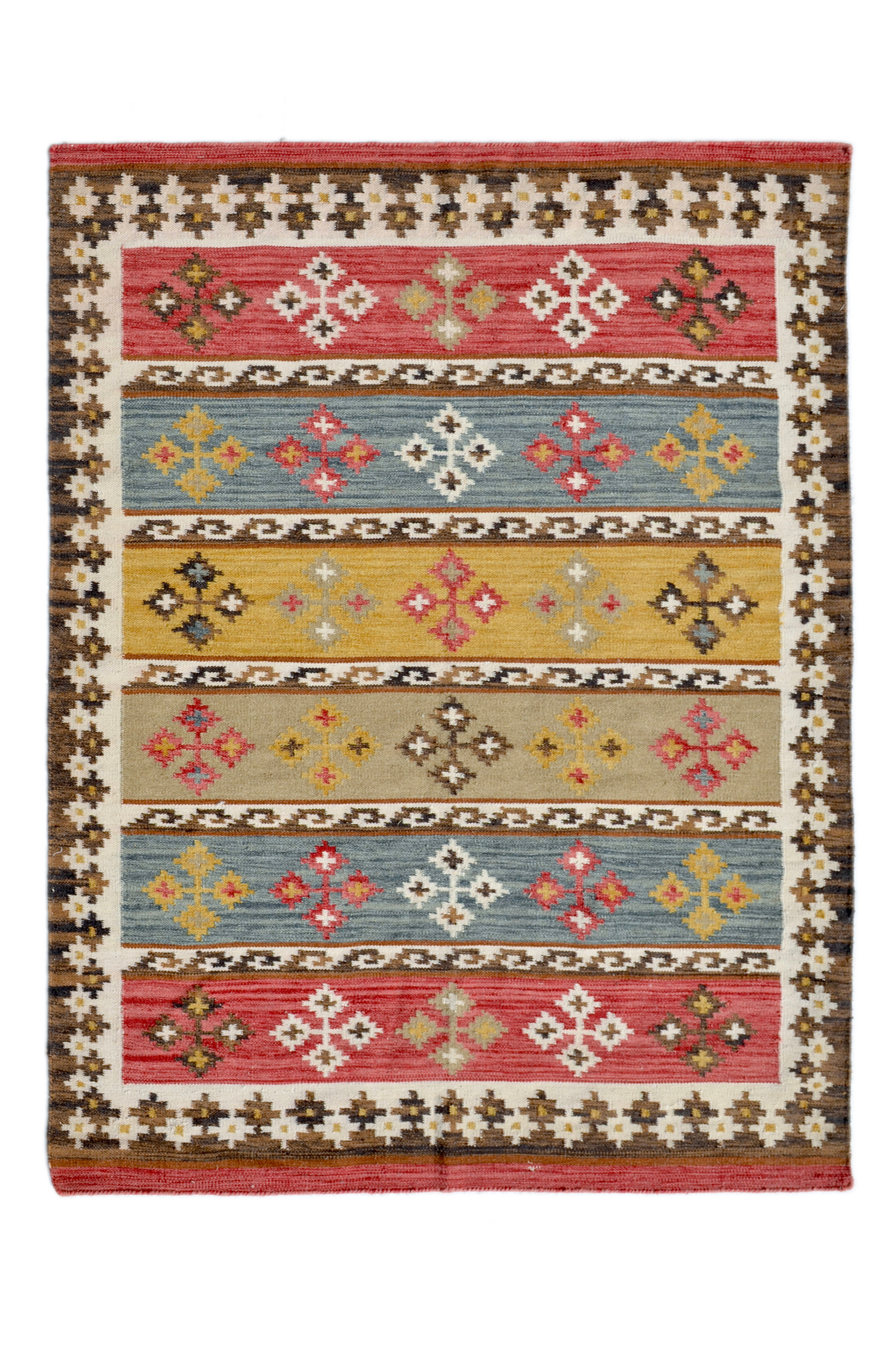
A flatweave rug has no pile — no raised loops or cut fibres. The yarn is woven horizontally (weft) over vertical threads (warp), creating a flat, thin textile. The Indian version of this technique is called a dhurrie.
Unlike pile rugs, flatweaves are:
- Lightweight — easy to move, roll and store
- Reversible — use both sides, doubling the lifespan
- Low profile — no tripping hazard, sits flat under doors
- Easy to clean — shake out, spot clean, or machine wash (small sizes)
Where to Use Flatweave Rugs
Flatweaves excel in spaces where pile rugs struggle:
- Dining rooms — chairs slide easily, crumbs shake out
- Kitchens — washable and stain-resistant
- Entryways — handles heavy foot traffic
- Covered outdoor spaces — verandas, balconies, patios
- Children's rooms — soft, safe, easy to clean
- Layering — place a flatweave under a smaller pile rug for texture and dimension
Materials
Our flatweave collection uses:
- Wool — the classic choice. Naturally stain-resistant, durable, ages beautifully
- Cotton — lighter and softer. Ideal for bedrooms and low-traffic areas
- Jute — earthy texture, sustainable, perfect for casual spaces
- PET yarn — made from recycled plastic bottles. Stain-proof, UV-resistant, sustainable
The Dhurrie Tradition
Indian dhurries date back centuries. Historically woven by women in rural households, they were both functional floor coverings and expressions of local identity — each region developing distinctive patterns and colour palettes.
At House of Rugs, our flatweave and dhurrie rugs are handwoven in Bhadohi using the same techniques that have been practised here for generations. Each piece is made entirely by hand on a flat loom.
Related Reading
What makes a dhurrie feel different from a pile rug
Flatweaves sit flush with the floor. No pile, no cushioning, no depth of shadow. This changes the whole room feel — a dhurrie-based room reads as lighter, more relaxed, and visually calmer than the same room with a pile rug. It also means sound reflects differently; dhurries offer less acoustic damping than hand-tufted wool.
Styling flatweaves in a modern Indian home
Dhurries work across aesthetic registers. Paired with mid-century furniture, they lean Scandi-minimal. Paired with classic Indian upholstery and jaali screens, they feel grounded and traditional. Layered under a smaller pile rug, they act as a visual extension of the sofa zone.
Where dhurries really shine: on wooden floors in Kerala homes, on polished concrete in contemporary apartments, and in verandas or Pooja rooms where pile rugs would feel too heavy.
Frequently asked questions
Are dhurries only for summer?
No — wool kilims and heavier dhurries work year-round. The lighter cotton versions do feel more seasonal.
Do dhurries need a rug pad?
On smooth floors (marble, tile, hardwood), yes. A thin non-slip pad prevents the rug from sliding.
Can you custom-weave a dhurrie?
Yes. Talk to our team about custom sizes and patterns.