Indian Rugs: A Heritage of Handmade Excellence
To own an Indian rug is to own a piece of living history. India is not merely a producer of handmade rugs — it is the world's most significant home for this art form.

A History from the Mughal Court
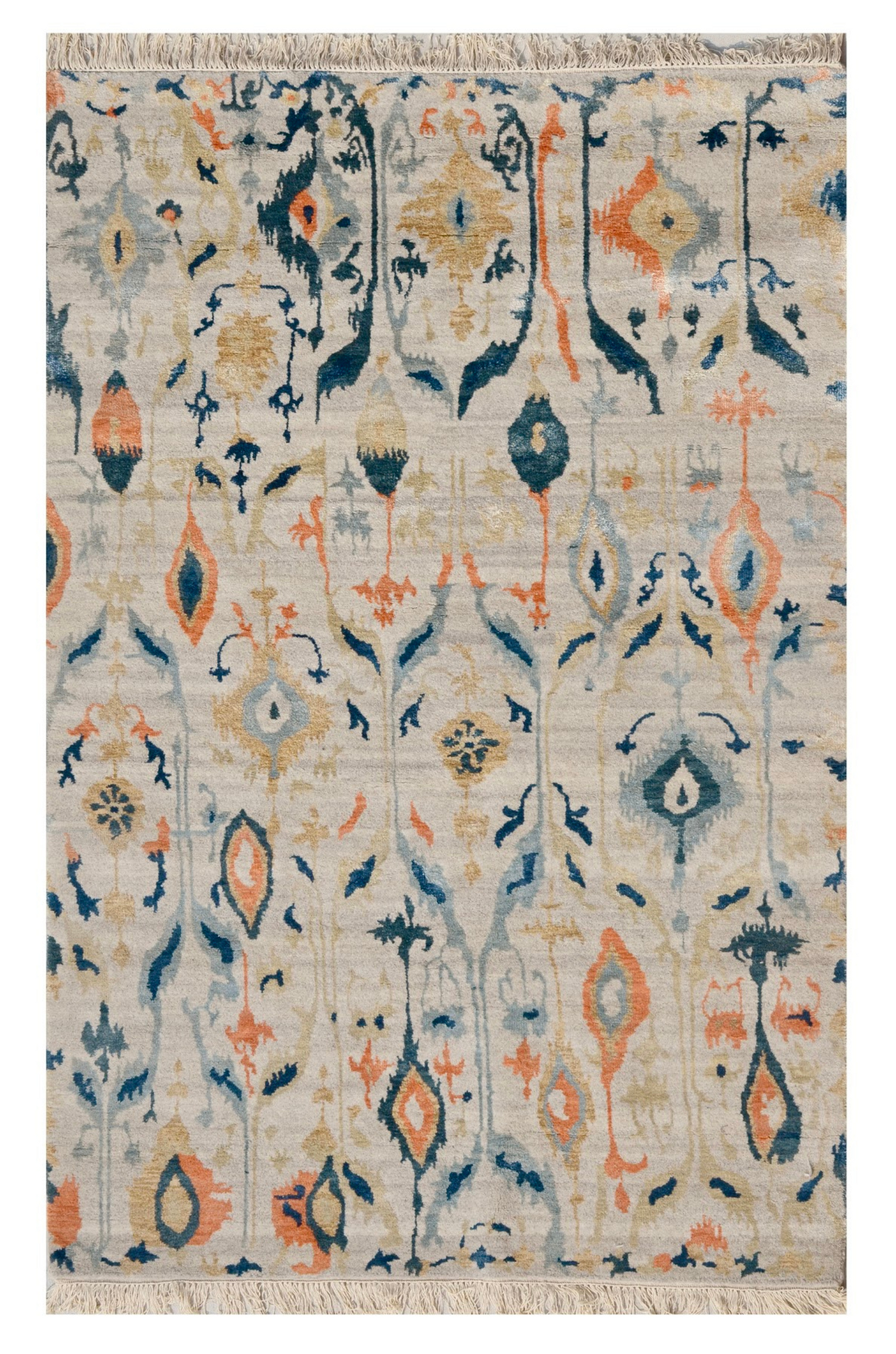
Emperor Akbar established imperial carpet workshops in Agra, Lahore, and Fatehpur Sikri. Persian master weavers trained local craftsmen, and what emerged was a new and distinct tradition. Mughal rugs were characterised by naturalistic floral imagery, rich jewel tones, and astonishing precision.
Great Rug-Making Regions
Kashmir
Produces the finest handmade rugs in the world. Tight Persian knot counts exceeding 400 KPSI, lustrous silk or pashmina wool, and Persian-inspired designs.
Bhadohi and Mirzapur
The carpet belt of India — a cottage industry where whole families participate. Wool pile rugs in traditional and transitional patterns, widely exported.
Jaipur
Known for flatweave dhurries and bold geometric patterns. A hub for contemporary rug design with international designer collaborations.
Amritsar
Influenced by both Persian and Kashmiri styles. Renowned for densely knotted wool rugs with classical patterning.
Why India Leads
Three converging strengths: depth of human knowledge transmitted across generations, breadth of technique spanning every major construction tradition, and material advantage with access to Himalayan wool, mulberry silk, and hand-spun cotton.
House of Rugs: Four Generations
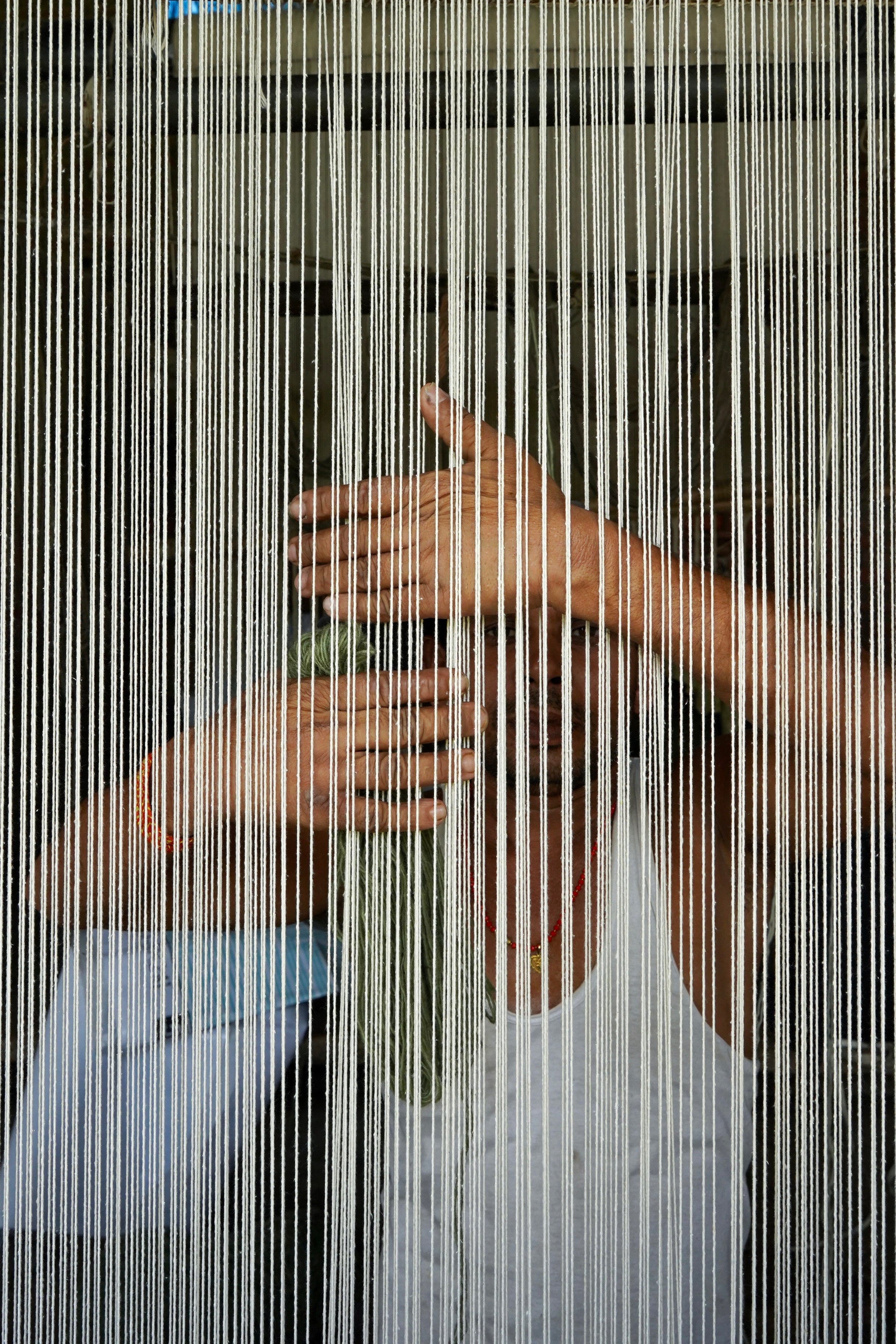
Founded in 1951, now in our fourth generation. Our weavers are primarily women whose skill represents accumulated knowledge passed down through generations. Every rug is handmade in India.
Learn more on our Our Story page or browse our complete collection.
Related Reading
Where Indian rug-making actually happens
Three regions dominate Indian rug production, each with its own technique and aesthetic lineage.
Bhadohi – Mirzapur (Uttar Pradesh). The largest hand-knotted carpet cluster in the world. Historically focused on Persian-influenced designs and wool production for export. Our workshop is here.
Jaipur (Rajasthan). Known for dhurries, flatweaves, and a strong contemporary design scene that emerged in the 1980s and 90s.
Kashmir. Fine silk and wool hand-knotted rugs, with a distinctive palette and patterning tradition influenced by Persian and Central Asian craft.
Why Indian craft is particular
Unlike Persian or Turkish rug-making, which remained concentrated in workshops and guilds, Indian rug-making spread into household production. A weaver’s family would often work on the same loom across generations. This gave Indian rugs an idiosyncratic quality — small variations from household to household, from generation to generation, that make individual pieces recognisable.
The trade-off: Indian production has historically been more variable in quality than the tight workshop systems of Persia or Turkey. Today, the serious Indian workshops have closed that gap while retaining the design diversity.
Frequently asked questions
Are Indian hand-knotted rugs as good as Persian?
At the high end, yes — a hand-knotted wool-and-silk rug from Bhadohi at 300+ knots per square inch is competitive with Iranian Tabriz or Kashan work. Persian rugs tend to have slightly longer documented heritage and higher collector value, but the craft quality is comparable.
What makes a rug “authentic” Indian?
Made in India, by Indian artisans, using techniques rooted in the regional tradition. Our four-generation family workshop in Bhadohi is one example; many others exist across Rajasthan, UP, and Kashmir.
For more on how our specific family ended up here, read our Bhadohi women weavers essay.