How Handmade Rugs Are Made: From Loom to Living Room
A handmade rug arrives fully formed — a quiet, beautiful thing. Understanding how it is made changes how you see it. The slight irregularities are not flaws — they are fingerprints of the people who made it.

Raw Materials
Wool: Naturally resilient with crimped fibres that bounce back. Fine rug wools from New Zealand and highland India are selected for staple length and lustre. Cleaned, carded, and spun into yarn.
Silk: From Bombyx mori cocoons. Extraordinarily fine, allowing knot counts impossible in wool. Degummed, reeled, and prepared for dyeing.
Cotton: Used for warp and weft (structural foundation). Strong, dimensionally stable. Also used in flatweave dhurries.
Spinning and Dyeing
Hand-spun yarn has subtle variation that catches light differently — contributing to visual depth.
Natural vegetable dyes — indigo, madder root, pomegranate, walnut — produce layered hues that shift in light and age with grace. Premium synthetic dyes offer consistency and wider palette for contemporary designs.
Setting Up the Loom
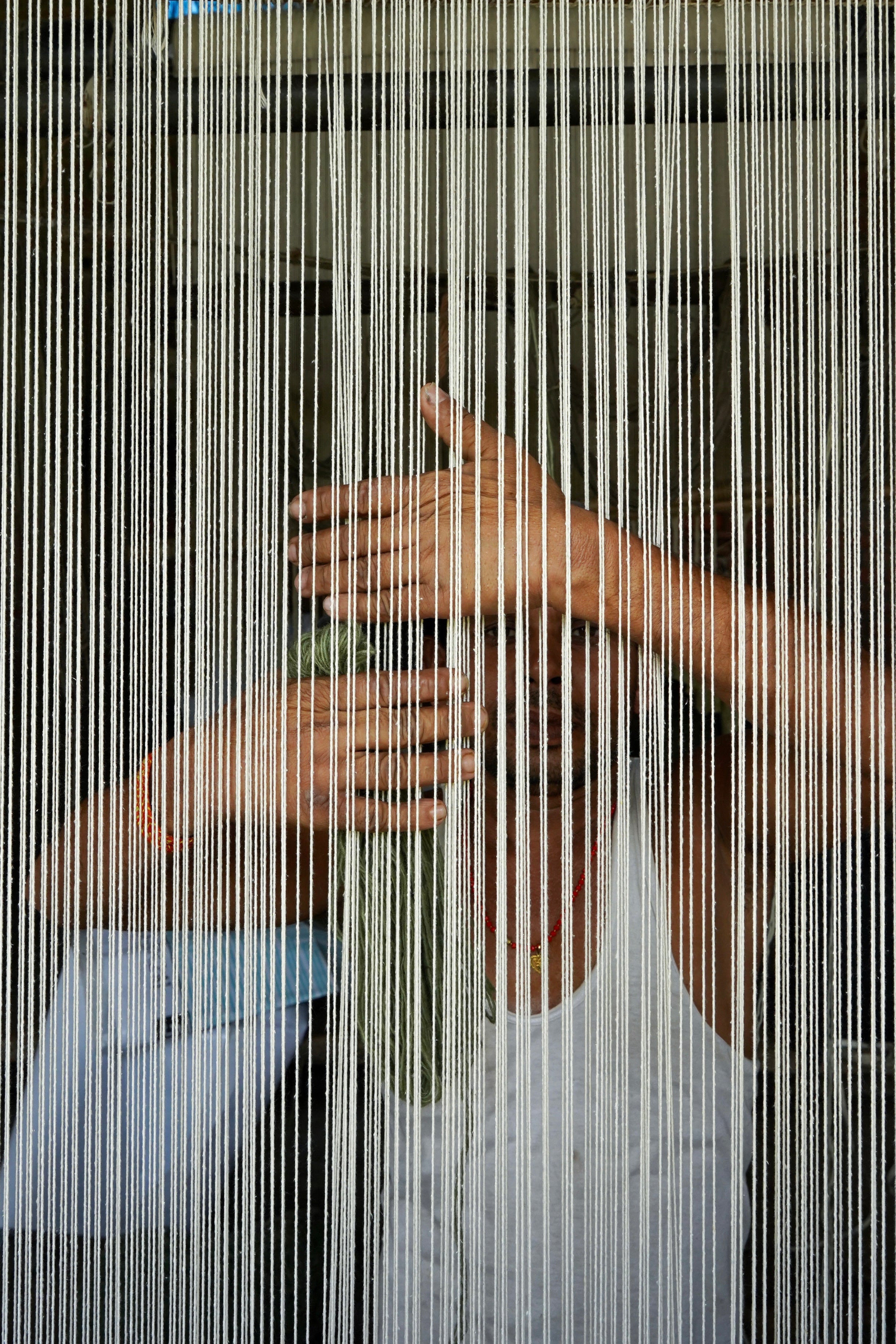
Warp threads stretched at precise, even tension. Spacing determines knot density. The cartoon (design guide) is mounted above the loom — each square represents one knot and its colour.
The Weaving Process
Working bottom to top: tie knots around warp pairs, pass weft to lock the row, beat with steel comb, trim pile. Repeat for every row. A medium rug: several hundred thousand knots. Fine silk: several million. An experienced weaver completes several thousand knots per day. A rug taking eight months is not unusual.
Washing, Stretching, Finishing
Washing: Removes lanolin, loose dye, dust. Softens wool, brightens colours. Done by hand with brushes and water.
Stretching: Corrects dimensional distortion. Pulled to exact specified dimensions.
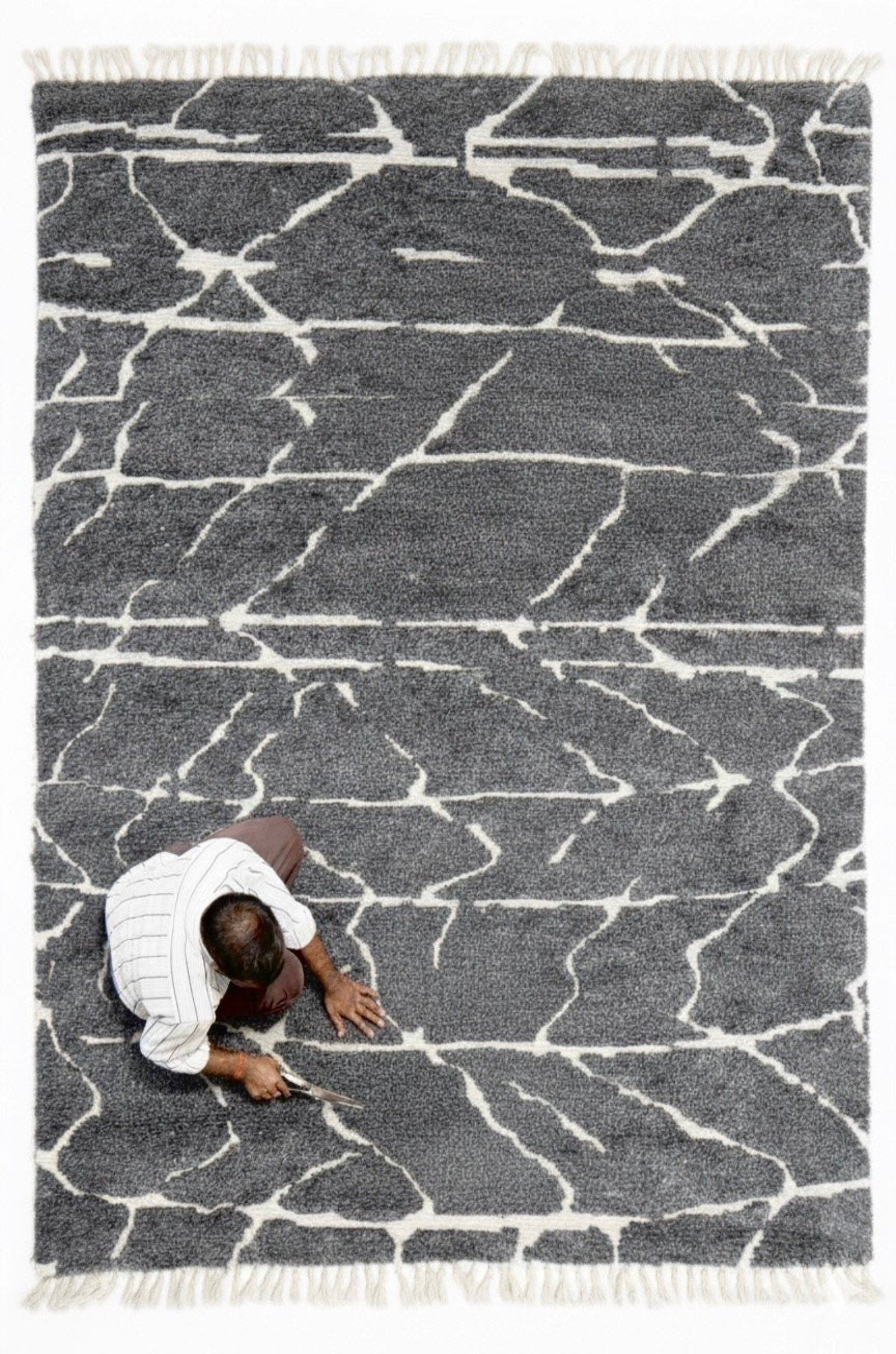
Final clipping: Even trim of pile surface, edge finishing — selvedge, overcasting, or fringe.
The Human Story
At House of Rugs, most weavers are women — artisans who learned from the women before them. Weaving is not just a livelihood — it is an identity and a form of knowledge passed down because it matters.
Visit our Craftsmanship page and Our Story.
Related Reading
The full production timeline
A large hand-knotted rug can take four to eight months from first knot to final finish. Here’s what happens in that time.
- Design & graph. The design is rendered onto graph paper or a digital graph, where each square represents one knot.
- Warp preparation. The vertical foundation threads are strung on the loom at the target knot density.
- Dyeing. Yarn (wool, silk, or blends) is dyed to match the design’s colour palette. Traditional and synthetic dyes both in use.
- Weaving. Knots are tied row by row. Multiple weavers rotate on large rugs.
- Trimming. Once complete, the pile is trimmed to an even height — a skilled step that affects how the pattern shows.
- Washing. The finished rug is washed with mild soap to remove dust, lanolin residue, and loose fibres. This also softens the pile and brings out the colours.
- Finishing. Edges are bound, fringe is trimmed, and the rug goes through final quality check.
What you’re paying for when you buy hand-made
Fifty per cent of the cost of a hand-knotted rug is labour. Of that labour, the vast majority is the weaver’s time at the loom. When you buy a hand-made rug, you are, concretely, paying for months of skilled human attention. There is no shortcut for that — not faster machines, not cheaper materials. The rug is the labour.
Frequently asked questions
Why do hand-made rugs cost more than machine-made?
Labour, materials, and longevity. A machine can produce in an hour what takes a weaver a month. The hand-made version will outlast the machine-made by decades.
Can you watch the rugs being made?
Yes — our Bhadohi workshop is open to visitors with appointment. Contact us to arrange.
For the human side of this story, read The Last Women Weavers of Bhadohi.